
- Assures customers of the organisation’s commitment to demonstrate environmental management.
- Maintains good public/community relations.
- Obtains insurance at a reasonable cost.
- Enhances image of the organisation or organisational positioning, and market share.
- Meets vendor certification criteria.
- Improves the organisation’s cost control.
- Reduces incidents that resulted in liability and demonstrates reasonable care.
- Conserves input materials and energy.
- Facilitates the organisation’s attainment of necessary permits and authorisations.
- Foster the development and sharing of environmental solutions.
- Improve the organisation’s relationships with local, state and the federal government.
International Organization of Standardization
ISO Services

ISO 9001
ISO 9001: Quality Management System

Benefits of ISO 9001
- Demonstrates organisation’s commitment to customers and stakeholders while strengthening “organisational capability”.
- Improves processes that result in reduction of errors and risk of rework.
- Increases customer satisfaction.
- Enhances image of the organisation or organisational positioning through proactive quality-focused leadership.
- The entire organisation recognizes its responsibility and involvement in the betterment of quality.
- Better defined processes and sub-processes, including their critical links.
- Recognition of deterrents to an operation’s or service’s efficiency and effectiveness.
- Identifies opportunities for continuous improvement.
- Strengthens commitment toward the organisation’s fulfilment of regulatory requirements.
- Improves communication amongst employees.
While it’s not readily apparent, ISO 9001 can also be applied to address areas such as customer concerns, administrative issues, equipment up/downtime, and process efficiencies, etc.
ISO 14001
ISO 14001: Environmental Management System

Benefits of ISO 14001
ISO 13485
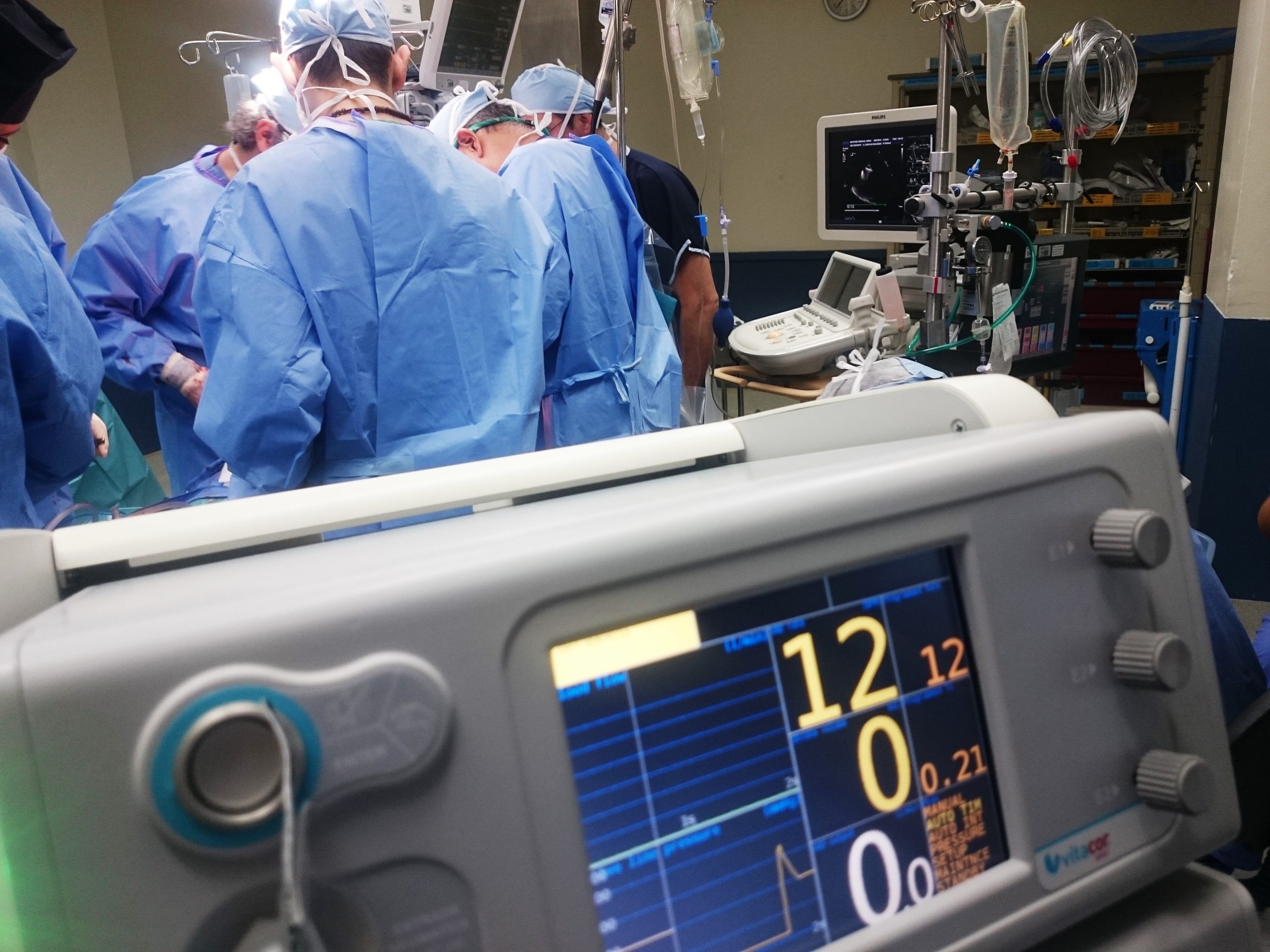
ISO 13485: Medical Devices Quality Management System
Benefits of ISO 13485
Good Distribution Practice for Medical Devices (GDPMD)
The Good Distribution Practice for Medical Devices (GDPMD) specifies the requirements for a quality management system to be established, implemented and maintained by an establishment of medical device importer/distributor/ authorised representative to comply with Malaysian Medical Device Act 2012 (Act 737) and Medical Device Regulations 2012.
The objective of GDPMD is to ensure the quality, safety and performance of medical device which include but are not limited to product sourcing and procurement; transportation and delivery; storage; installation, commissioning, service and maintenance, calibration and after sales service; tracking, documentation and record-keeping practices. Organisations that are involved in wholesaling and/or importing Medical Devices in Malaysia are required to implement and obtain GDPMD certificate to apply for an establishment license.
OHSAS 18001 / ISO 45001
OHSAS 18001: Occupational Health & Safety Management System
Benefits of ISO 14001
ISO 45001: Occupational Health & Safety Management System
 In March 2018, the International Organization for Standardization (ISO) published ISO 45001:2018 – Occupational Health and Safety Management System Requirements. The international standard will give organisations a framework to improve employee safety, reduce workplace risks and create better, safer working conditions, all over the world.
It follows other management system approaches such as ISO 9001:2015 and ISO 14001:2015 by being built on the same high-level framework, Annex SL which allows for an easy integration with other similar standards. The new ISO 45001 also incorporates other International Standards in this area such as OHSAS 18001, the International Labour Organization’s ILO-OSH Guidelines, various national standards and the ILO’s International Labour Standards and Conventions.
ISO 45001 has replaced OHSAS 18001, the world’s former reference for workplace health and safety. Organisations already certified to OHSAS 18001 will have Three (3) years to comply with the new ISO 45001 standard, although certification of conformity to ISO 45001 is not a requirement of the standard. Migration to the standard will end on March 11, 2021 at which point OHSAS 18001:2007 will be completely withdrawn.
Benefits of ISO 45001
- Stand apart from competitors by implementing the most up-to-date internationally recognised occupational health and safety standard.
- Builds a strong, efficient organisation centered around “best practices”.
- Increases trust in the organisation from public, future employees and prospective clients by facilitating continuous improvement of employee morale, safety and performance as well as transparent corporate social responsibility efforts.
- Attracts lower insurance premiums and proves due diligence to the marketplace.
- Improves mental health and physical safety of all persons affected by the organisation’s activities whether by process or use of machinery.
- Improves managerial oversight through monitoring and measurement of key performance indicators for health and safety.
- Improves preventative assessment of risks and hazards through an internal auditing “early warning system”.
- Increases Return-On-Investment (ROI).
- Occupational focus reduces staff turnover and improves retention rate.
- Deals with risks and opportunities whereas OHSAS 18001 and other similar standards only dealt with risks.
ISO 22000 / FSSC 22000
ISO 22000: Food Safety Management System
 Food-borne hazards present in food at the point of consumption raises a food safety issue. Adequate control in place at any stage in the food chain is needed to ensure the handling of food safety hazards. ISO 22000 is the globally recognised standard developed by the International Organization for Standardization (ISO) for ensuring food safety at every point of the food supply chain. The continuous increase in consumer demand for safe food has led to the development of numerous food safety standards such as ISO 22000, CODEX HACCP, Good Manufacturing Practices (GMP), Good Housekeeping Practices (GHP), Good Distribution Practices (GDP), Good Laboratory Practices (GLP) and Good Agriculture Practices (GAP).
Compliance to ISO 22000 requires that all organisations regardless of size, involved in the food chain are to ensure that food safety hazards are controlled, and that the food produced is consistently safe for human consumption. Therefore, food safety is a joint responsibility that is principally assured through the combined efforts of all the parties participating in the food chain. Even the organisations that produce the equipment, cleansers, additives, ingredients and packaging involved in food production are also eligible for certification.
ISO 22000:2018 was published on June 19, 2018, to harmonise the requirements for food safety management worldwide. ISO 22000, “Food safety management systems – Requirements for any organisation in the food chain,” applies the same High-Level Structure (HLS) common to other ISO standards and is intended to be compatible with the current tools for food safety management, ISO 9001:2015 and HACCP, and to extend its reach for greater diligence. Organisations have a Three-year transition period in place for ISO 22000:2018 until June 29, 2021 at which point ISO 22000:2005 would be invalidated.
Benefits of ISO 22000
FSSC 22000 version 5: Food Safety Management Systems Certification Scheme

Benefits of FSSC 22000
- Provides a powerful management system framework fully integrated with the organisation’s overall management system. FSSC 22000 version 5 is also fully consistent with other standards, such as ISO 9001 and ISO 14001 (including the alignment with the ISO High Level Structure).
- Provides a robust Hazard Analysis and Risk Management methodology based on HACCP principles and assists to improve food safety effectiveness and efficiency.
- Pre-requisite programs with technical specifications, such as ISO TS 22002-1 for food manufacturing provide additional due diligence along the supply chain and allow for adapting to needs of customers.
ISO 27001
ISO 27001: Information Security Management System
 ISO 27001 is an international standard published by the International Standardization Organization (ISO) which is recognised globally for managing risks to the security of information held in an organisation. The latest revision of this standard was published in 2013 with its full title as ISO/IEC 27001:2013. The standard provides a set of requirements for an Information Security Management System (ISMS) and adopts a process-based approach for establishing, implementing, operating, monitoring, maintaining, and improving an ISMS.
ISO 27001 is suitable for any size of organisation, in any sector. It is especially suitable for the protection of critical information in sectors such as banking, finance, health, public and IT. The standard also applies to organisations which manage high volumes of data, or information on behalf of other organisations such as data centres and IT outsourcing companies.
Benefits of ISO 27001
ISO 22301
ISO 22301: Business Continuity Management System

Benefits of ISO 22301
ISO 37001
ISO 37001 Anti-Bribery Management Systems

Transparency and trust are the building blocks of any organization’s credibility. Nothing undermines effective institutions and equitable business more than bribery, which is why there’s ISO 37001.
It’s the International Standard that allows organizations of all types to prevent, detect and address bribery by adopting an anti-bribery policy, appointing a person to oversee anti-bribery compliance, training, risk assessments and due diligence on projects and business associates, implementing financial and commercial controls, and instituting reporting and investigation procedures.
Providing a globally recognized way to address a destructive criminal activity that turns over a trillion dollars of dirty money each year, ISO 37001 addresses one of the world’s most destructive and challenging issues head-on, and demonstrates a committed approach to stamping out corruption.